
What Causes "Procrastination?" Thoughts On What REALLY Causes This And Others Tics, And Why We Need A New Map Of Neuro-Diversity, Less Moralistic, More Accurate
The Old Map Was, Inevitably, Drawn By Neuro-Normals; How To Heal Even Without Relying On The Experts, Because YOU ARE The Expert, And They Should INTERVIEW You, But Granularly This Time

I am keenly interested in what we call “procrastination,” (sounds so awful, but that’s the only word we have right now.)
I have an affinity and empathy for people who battle various forms of “freeze,” “functional freeze,” last minute functionality, etc. etc.
This quest has intensified lately, as I am cast upon the quiet snow mountain of my own post-trauma, (some healed, some not)— “personality defects” which I know to be trauma-tics, electric, precise, predictable and mappable.
What about curable?
That’s the fascinating part.
I sincerely believe they are curable once they have been accurately mapped.
Lost Continent Of Neuro-Flora
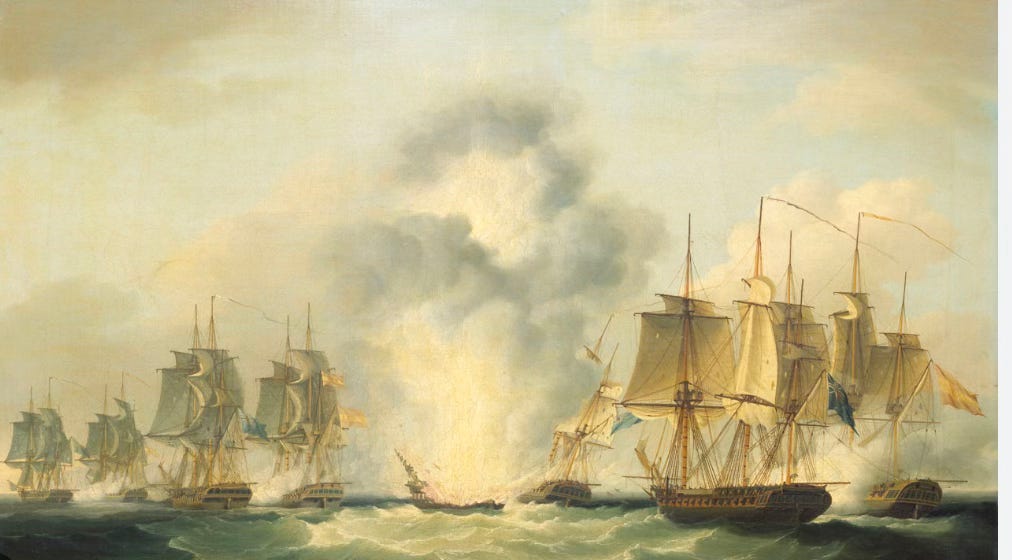
In my dream-scape, I sail the undiscovered world like Roald Amundsen, alone in my conviction that there is a part of the neuro-map yet to be beheld— maybe even a continent. On this continent, we will find mercy, understanding, compassion, and finally laughter, for a vast array of behaviors we previously believed to be moral flaws, specks of filth.
I am driven by a need, a desire, to get there (despite no academic degree in neurodiversity.)
Part of the dream is to rescue people trapped on that mountain, including those who are no longer alive, except in memory.
Part of the dream is to discover, retrieve off that mountain, and integrate— myself.
“Self” includes but is not limited to: Gestation and birth history, ancestors, parents, siblings, children, spouses, geography, traumas major and minor, degradations major and minor, poisons, hexes, ill will, malevolent entities—all food, all “medicine,” molds, vaccines—all memories, all relationships, and then finally, all of that which, despite it all, results in: Joy, love, harmony, and healing. The word “healing” is to trauma recovery in 2026 as the word “green” was to all that grows in the world’s forests, prior to, say Linnaeus. A very inadequate word, asked to carry a multiverse of lost specifics.
The lost continent, according to me, is the asking of the trauma “patient” or “survivor,” (not a fitting word either) the tiny, tiny questions nobody ever asks:
An example:
—Are there dishes in your sink now?
—Are there dishes in your sink more often than not?
—What is the thought process when dishes are not washed? (Not that they always have to be.)
—What might make you feel safe enough to stop, turn on the water, and do the dishes?
That’s an initial “crystal:” I would look for the source of the unsafety behind the “procrastination.”
The anxiety.
I would never invoke cliches like: “You’ll feel better about yourself when you get it done. You’ll get a bit of dopamine.”
Nuh uh.
I would explain and work from my emerging theory for folks like us: You are not lazy, you are not self absorbed, you do not think “the world revolves around you.” Rather: You are using all of your brain’s-band-width to identify threat/fear/attack. You have been doing this since before you could talk, most likely.
Chances are you reached for fawning, when rage stormed around you, when all else failed, (and all else always failed.)
Was that goodness? Kindness? Terror? Empathy? Stategy?
A combination of all? We will never know, and it’s not so important.
The thing is, you, trauma survivor, disassociate, often, and at your peril.
It’s getting worse, do you notice? Please notice, everything. This is not a popularity contest, it’s survival.
These neurological events cause the very thing that puts you farther away from what you want, until you’re stuck on that mountain, isolating so profoundly from virtually all people, who scare you, it is bordering on no- longer-viable.
I have improved many of mine, with my cats as my witness—I work at it, every day.
We all have different ones:
From household mess to lateness to procrastination to self-sabotage to brokenness to social phobia to—fill in the blanks.
Call me crazy, but lately, more and more, I want to map it all, with tiny brushstrokes. From inside the syndrome, not from experts on the internet who… kind of… do not have it. (Nobody who really has “it” has a YouTube channel or podcast.)
I wish I could conduct the interviews between the healers and the healees—
Foggy Maps, Drawn By Neuro-Normals
So called “empaths—” warm, “easy going” people can be (I said can be) the same types who are “always late,” and accused of monstrous self importance.
This is a good Calvinist guess, (the lateness/self-importance theory) but made only by people who are extremely clueless about trauma and brain development.
This cliche was erected by neuro-normal punctual people who never interviewed, carefully, nor took psycholigical interest in, a chronic late comer.
(My mother, who died in 1999, was late-shamed as recently as 2026, over a lateness thing she allegedly committed in the late 50s. Now you understand, perhaps, why I kiss the ground in Spain? I’ve never heard any person late shame another person here; it’s Nirvana that way.)
Famous Cases Re-Assessed
One often hears about the chronic lateness, to cite one belabored example, of Marilyn Monroe. Surely she believed the world “revolved around” her, because in her case, for a time, it actually kind of did.
But on my neuro-trauma map of the new world, it will be understood in kindergarten that Marilyn Monroe, who grew up fatherless, abused, and shuttled between foster homes, suffered undiagnosed brain damage. She developed a common trauma symptom of children who had no structure, safety or support in their developmental years: Freeze.
Freeze leads to lateness.
She tried to overcome her brain damage by becoming a dream, literally. The dream of all men.
This (story) too should always be understood as a trauma symptom.
No trauma, no “Marilyn Monroe.”
No money for those Hollywood studio men.
No glamour for Arthur Miller.
She likely felt (waaaay) beneath worthless/unloveable, so all those shrinks and better-knowing Calvinists who diagnosed Monroe’s lateness as “self centeredness” should be ashamed of their academic inaccuracy.
Her real last name was of course not “Monroe.”
Shape shifting is also a symptom—people who evacuate their birth name.
Trauma Survivors Must Themselves Draw The Maps Out, Not Rely On Neuro-Normals
There is a gap. A missing piece. Nobody (also not an accurate word) interviews the subject/patient properly, because—guess what!— the interviewer/therapist, does not have the brain damage of his or her patient, if he or she did he or she would not have gotten that degree. So we have “square” addressing “circle” or “blue” addressing “red,” or “bird” addressing “fish.”
Lost in translation: “What is that tic, from?”
“What happens when we work on it like this?”
I don’t even want to be on the same bus as somebody who still believes late people are simply “full of themselves.”
I don’t want to be on the same train with people who think interrupters are merely “rude.”
The effect may appear rude—but few of these behaviors are “moral.” (Some, I admit, are, “moral failings.”)
But most of these things have (I believe) neurological micro roots (causes) few are taking an interest in, even among the trauma healing professional class. It’s part of a vast terra incognito—a flora beneath the arctic ice— the black forest of misinterpreted disassociation.
People need help—they are trapped.
Part of what keeps them trapped are foggy assumptions about character traits—which ones can be”cured,” how, and by what methods.
I want to understand what is happening, neurologically, when a person interrupts, for example.
(I do it.)
I would ask my imaginary subject:
“Did you get excited about a bonding moment in the conversation? Did thoughts rush in you feared would be lost? Can you bite your lower lip, gently, as a method, when somebody is speaking?”
I would issue no shame. But I would tell my “patients,” that the “world,” in its primitive understanding of brain trauma, pegs and punishes the late comers and the interrupters as grandiose, rude, monsters, who deserve no love.
So, hence— let’s practice and train, practice and train, eliminating those invitations for others to abuse you, label you, and shame you.
(When we have done this, dear imaginary trauma patient, let us both be prepared: They won’t notice. They will instead feel cheated of those blooms of your flaws to munch on, when they are hungry, and crave to feel superior. However, dear imaginary patient—you and I will know. And we will celebrate, when you have been punctual for a month, and not heard the dreaded words, “let me finish!” for two months.)
Women and homosexual men crave shaming others over these kinds of things, more than heterosexual men, in my experience. I will issue no apologies for this accurate observation.
And why does this sexual/gender generalization matter? I don’t yet know. I need my flotilla.
It’s got something to do with the energetics of power in society vs. the home.
The Journey Of Self Re-Integration
First we must trace on our terra incognito map, what makes “you” do it—the bad thing, the thing that sets you back, the thing that aint good.
A small part of my own map:
Question from imaginary perfect-world trauma healer/Cognitive behavioral therapist
“What feeling arises when you put off sending an invoice even though you are frightened about paying your bills, have debts, etc?”
For me, the answer is: Fear.
Fear of what?
Once I asked myself the correct question the answer was immediate:
Resentment over a transaction.
I grew up in a home where feminine martyrdom reigned unchecked and terrifying, swirling in a man-less, father-less, husband-less, (3 generations on the Swedish maternal side) survival-stress-toxic vortex.
Power was gained by way of resenting what another had not done, regardless of whether said person had done it, done it passably, done it exceptionally, sullenly, cheerfully, or at all. The goal was not to have a household where chores got done, but rather, one where somebody else could be designated as “in trouble,” and zapped with the “you’re not sufficiently animated about deeeeeep cleaaaaaning” zapper. There was no such thing as being either sufficiently animated, or out of “debt,” for having done one’s chores. There was no such thing as the house being clean enough.
My father—true story—once enlisted Pan Am, in 1963, to call the New York apartment phone, (ring, ring) to feign they were informing Mr. Farber of a delayed flight, which would mean grandmother (Mormor) Ingrid would not arrive that evening on the flight from Stockholm. He was afraid my mother would miscarry my sister, from cleaning panic.
It played out like a scene in a movie: My mother stopped cleaning, put her feet up, doorbell rang, my grandmother arrived, everybody laughed— my mother did not miscarry my sister, and my father as well as Pan American deserve a round of applause for this happy ending tale.
(So 60s.)
Is this interesting or important? I think so.
My mother was cleaning as though her life depended on it. There was no “chill” setting.
Maybe time to stop fetishizing the outstanding house-mistress, be she Swedish, or Russian, or Spanish?
“Neuro-diversity” has come a long way. “Trauma healing” has also come a long way. But I still feel we are essentially in the stone ages, fumbling in (mostly dark,) with a few lights turned on. As soon as they turn on a light, (like a Peter Levine, a Pete Walker, a Tim Fletcher—all we trauma moths flock in.
I love them all, but I still insist we need a much more detailed map; It needs to be drawn by the “survivors.” The way Ingrid Clayton has done vis a vis fawners.
Do we who are not being bombed have a right to speak of “trauma?”
Another question I struggle with. Here is my answer:
If we don’t confront unhealed trauma, we will only ever drop more bombs on more innocent people until there are no people left.
I don’t want much to do with people who are proud ignorers, let’s call them, of their unhealed trauma.
I was on the phone with a friend yesterday, who I have (by his account) helped, with his C-PTSD, as he has helped me— and we spoke of the potential of all this.
“I don’t have a degree…” I said. “But I wish I could work with people in this manner.”
He told me I was the first and only person who had ever helped him. I did—my way, and it was neither smooth, polished, nor find-able in any trauma healing book. It was done from the vantage point of “it takes one to know one.”
When he seemed to be disappearing into his core survival mechanism, (a robotic vanishing) after a TRE session I (admittedly bossily) packed him off to, I actually started yelling. I did that because I needed to activate his response system. I was losing him.
“What is going oooonnn???” I yelled. “Talk to meeeee!!”
“Lo siento,” I kept saying to my Spanish taxi driver, as this was unfolding, the other day.
“I’m not yelling at you,” I kept… saying… to my friend, who was most definitely hearing yelling. Loud.
Is loud always bad?
When he emerged, back to the water surface, he was alive, he was integrated. His vanishing “act” was a symptom of the layered trauma making its exit via muscles and sinews, after a potent TRE session.
If you saw a child, or an animal, wading in front of traffic, what would you do?
You would yell, really loudly. It would sound like anger.
Can anger be purposeful? Can anger be loving? Can anger be a mobilizing life force on rare occasions?
I think these are good questions.
I myself still abject and reject yellers, and expect exile myself, when I have yelled.
I am a yeller.
I have no choice but to work on and with myself as I am, at this moment, until I’m off the mountain. And I want to do this for others.
Frances Leader wrote what I thought was an important, truthful, poignant confession about her own journey with all this.
She knows she disassociates. She is mapping her trauma, from the inside.
This should be applauded.
Here’s her essay, “Bullies.”
I say: Bravo.
Those who are able to get honest, who are willing to carry the bloodied, torn flags of trauma survival and not lie, idealize, or micro-shame—bravo.
If you took someone’s head off—confess it as residual trauma yet to be healed. Even if, yes, you are a woman, and we all know God has yet to create woman who has anything to be sorry for.
(Sarcasm intended.)
Don’t pretend, my sisters, that your rage was “understandable,” according to the surface events inside the narrative frame.
Say: “I have unhealed C-PTSD.
I can say I’m “sorry,” but that would suggest I had control in that moment that I did not deploy. So instead of “sorry,” I’ll say this:
You did not deserve that. I hope you do not leave me.”
Coda:
A Lateness Story
New York City, circa 2002. I met a very charming, funny woman at a brunch party, hosted by a British friend, part of a circle who’d all come to New York in the wave of Anna Wintour, McNally brothers, Christopher Hitchens etc. (80s) She and I hit it off hugely and I was delighted to have a new friend who was so funny, and charming.
The next day, I think it was, I learned she was about to get evicted for non payment of rent. After a few days of her hiding from her landlord in her (5th Avenue!) apartment.
“You can move in with us,” I said, without first asking my then husband, who was very tolerant, maybe too tolerant.
Once it was down to boxes of worth-saving belongings, in a few boxes—move in she did.
She lived with us for 10 months, rent free. I did not resent it, neither did my ex husband, and our son loved her, as did we. Lots of laughs. She helped out at times.
Oh, who cares?
Anyway.
She needed money one day, in a very acute fashion. I think it was either $200 or $250, and I had either $250 or $300 in my account, so I told her I could give it to her. Why, I can’t recall, but she needed to be handed this money, from a downtown location, so we agreed to meet at a cafe downtown. I came running, I was 15 minutes late. But I had the cash. I was momentarily proud of myself as a human. This would soon be dashed—
At the cafe table, I remember (as we remember humiliations verbatim, like part of the forest’s fossil record) she said, in that beautiful British accent, as I apologized for being late:
“Well, my father taught me always to be on time. He said it’s a sign of respect.”
I was speechless.
Jaw dropped.
Rock, paper scissors: Wow. You can get castigated for being late even when you are operating as an ATM on human legs.
I think I said nothing. And then I cut her off, with no explanation, after she re-located to the UK.
I still feel the burn, the anger, the shock. And I still miss her.
And I still do not trust the overly punctual.
I am likely to be too anxious to read comments, as I am convinced nobody knows what I mean, when I write about lost flora, continents, brain maps…
It's super intense and "important" but it leads inevitably to a period of disassociation. This is why I want answers. Now.
We all need answers that are simple, and workable. How can I get better?
I don't want to hear the word "healing!"
Also: Writing is a trauma symptom. A glorified trauma symptom.
Bill Gates’ FrankenTicks is part of the 24/7 flood the zone with fear porn. Which causes “procrastination paralysis”. Ticks for Tics.